How a Covered Bridge Became a Battlefield
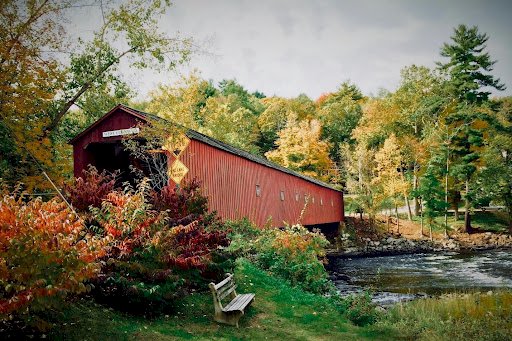
Covered bridges were never built for war. They were built for wagons, livestock, and neighbors moving between towns. Designed to shelter travelers from rain and snow, they stood as symbols of connection and routine life.
But during the Civil War, even the most ordinary places were pulled into the conflict—and inCameron A. Crisp’s Three-Tooth Confederate, a covered bridge becomes one of the most sobering reminders of how quickly normal life can be transformed into something unrecognizable.
In the novel, the bridge is not a strategic marvel or a famous landmark. It is simply there. Horace Lanham, the protagonist, has crossed it before in peaceful moments. But when war arrives, that same structure becomes a place of fear, exposure, and sudden violence.
From Shelter to Vulnerability
Covered bridges offered protection from the elements, but in wartime, they also became choke points. Armies moved along the same roads civilians used, and bridges naturally drew attention. In Three-Tooth Confederate, the bridge provides brief shelter from rain and cold, yet it also traps those beneath it. What once felt safe becomes dangerous the moment artillery enters the picture.
The scene captures a central truth of war: familiar places offer no guarantees. The bridge does not change, but the world around it does. Soldiers who once walked across it without a second thought now hide beneath its beams, listening for movement, waiting for fire.
A Moment That Changes Everything
What happens at the bridge marks a shift in Horace’s experience of the war. Until that point, danger has been present but distant. Under the bridge, it becomes immediate and personal. The sudden violence that erupts there strips away any remaining sense of control, leaving only shock and disbelief.
This moment reinforces one of the novel’s strongest themes—that war doesn’t announce itself with ceremony. It arrives abruptly, often in places that once felt ordinary. The bridge becomes a dividing line between before and after.
Why the Bridge Matters
The power of the scene lies in its simplicity. Cameron A. Crisp doesn’t rely on grand speeches or sweeping tactics. Instead, he lets the setting do the work. A structure meant to connect people instead becomes a place of loss and realization.
By turning a covered bridge into a battlefield, Three-Tooth Confederate highlights how war invades everyday life. No place remains untouched. No memory stays purely peaceful. The bridge stands as a reminder that war doesn’t just happen on open fields or named battle sites; it happens wherever people happen to be.
In Three-Tooth Confederate, a covered bridge becomes a battlefield not because it was meant to be one, but because war has a way of claiming everything in its path.
What's Your Reaction?