The 12-to-18-Month Stretch Nobody Warns New Parents About

Somewhere around twelve to eighteen months, a lot of parents hit the exact same wall at basically the same time, and nobody warns you beforehand. Dinner turns into a food fight nobody signed up for. Every board book in the house has a chewed corner within a week of showing up. If you have been up googling how to stop toddler from throwing food at eleven at night, sweet potato drying on the wall behind you, same, honestly, been there. Not alone in this one, not even a little, and it is not a sign you are messing anything up.
Fell into this whole rabbit hole over a friend’s kid, actually. She mentioned her son had started launching peas off his highchair like it was his personal mission in life, brought it up in our group chat half-joking, and by the next morning three other moms had basically the same story from their own kitchens. Not a coincidence, apparently. There is a real pattern under it, and once you spot the pattern the whole stretch stops feeling so random.
Why this age, specifically
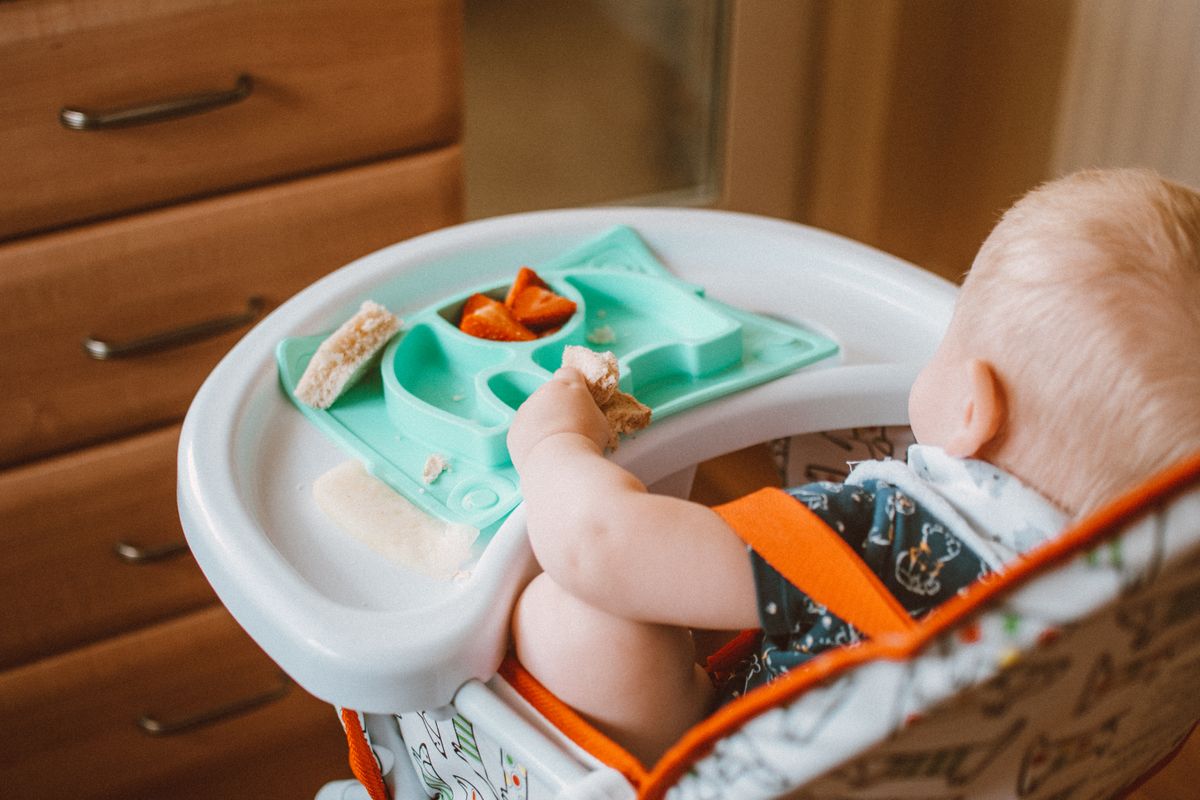
Somewhere around twelve to eighteen months a toddler starts genuinely getting cause and effect, words just have not caught up yet. No "I am full," no "I do not want this" in the vocabulary yet, so the plate ends up doing the talking instead. Not defiance dressed up as a tantrum, not really, more like the same small experiment on a loop: does this get a reaction, does the plate come back refilled, does something else interesting happen next.
Books get treated almost the same way during this window, just with a mouth instead of a hand. A toddler does not experience a book the way an older kid does, they explore it with their hands and mouth before language even enters the picture. That is not a phase to train out of them, it is genuinely how a lot of early learning happens at this age.
What actually works at the table
Here is what actually surprised me once I dug into it. The instinct most of us have, big reaction, then a different snack a few minutes later to smooth things over, is more or less the exact recipe for keeping the whole thing going. A gasp, a raised voice, honestly probably the most interesting thing that happens to a toddler all day, of course it gets an encore tomorrow. Swap in a new snack once the throwing starts and, congrats, you have just taught your kid that throwing is basically how you upgrade your order.
What actually helps is way less exciting than that. A schedule that brings a genuinely hungry kid to the table, not one who chugged a cup of milk twenty minutes ago. One calm limit, same words, every single time. Meal ends quietly the second the throwing restarts, no lecture, no bigger reaction. There is a solid step-by-step version of this whole approach on 3 Things for Mom’s guide, how to stop toddler from throwing food, I landed there myself somewhere around the third night of finding rice under the table.
The part almost nobody mentions upfront: this does not fix itself in one meal, or even one week. Most of it fades out on its own between eighteen months and two years as language catches up, and consistency at home genuinely does shorten how long the phase drags on. It is not about finding a magic trick, it is about doing the same boring thing every time until it stops being interesting to test.
The other half of the same stretch: books that do not survive
While all that is happening at the table, the exact same toddler is usually putting every board book in the house through a stress test. Corners get chewed. Pages get flipped to the same spot forty times in a row. Every so often, a book goes flying across the room right alongside the peas.
That is actually the same underlying thing showing up twice. A toddler exploring texture and cause-and-effect with food is the same toddler exploring texture and cause-and-effect with a book, just with different consequences for the couch cushions. The fix here is not different behavior from the parent so much as different gear that is actually built for the phase instead of fighting it. Thin paper pages just do not hold up to a toddler who processes the world by mouth first. Thick, chew-resistant board books do, and reaching for the right ones from the start saves a surprising number of "why is this ripped already" moments.
If you are stocking up or replacing something that did not survive the first week, there is a solid, honestly-reviewed rundown of sturdier options at 3 Things for Mom’s guide to toddler board books, broken down by what actually holds up to chewing versus what just looks durable on a shelf.
Where that leaves you
Throwing and chewing get treated like two separate problems most of the time, but really it is one window doing what it is supposed to do. Not your fault, either of them, and neither sticks around forever, even on the nights it sure feels that way. Food throwing calms down once words catch up to what a toddler is actually trying to say. Book-chewing calms down on its own timeline too, once those little fingers get less exploratory and a bit more careful.
Two things move the needle here, and neither one is exciting: staying calm and consistent every single time, and picking gear that is built to survive the phase instead of getting tossed after a week. Boring advice. Still the stuff that actually worked for us, more than anything fancier I tried in between.
What's Your Reaction?